Patrick Dempsey recently talked to GQ Spain about his collaboration with Porsche Design, racing, working on Ferrari, his future projects and more.
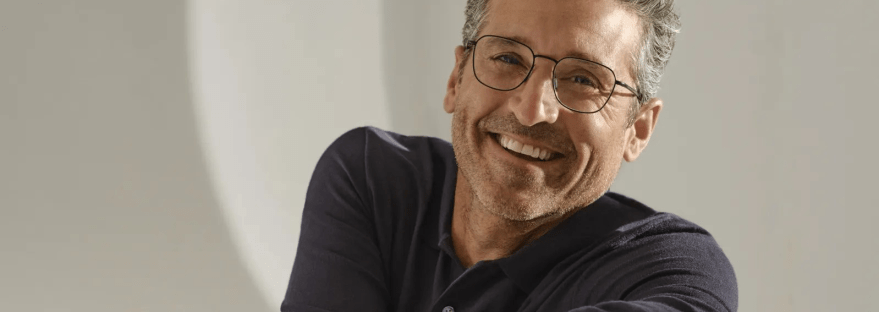
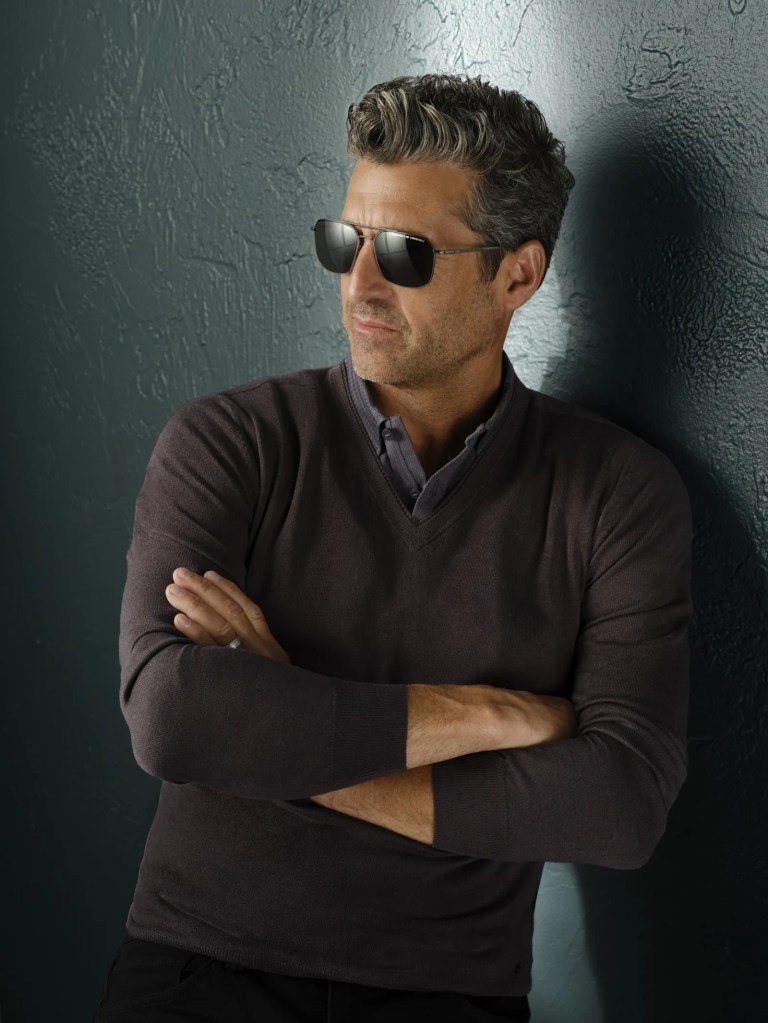
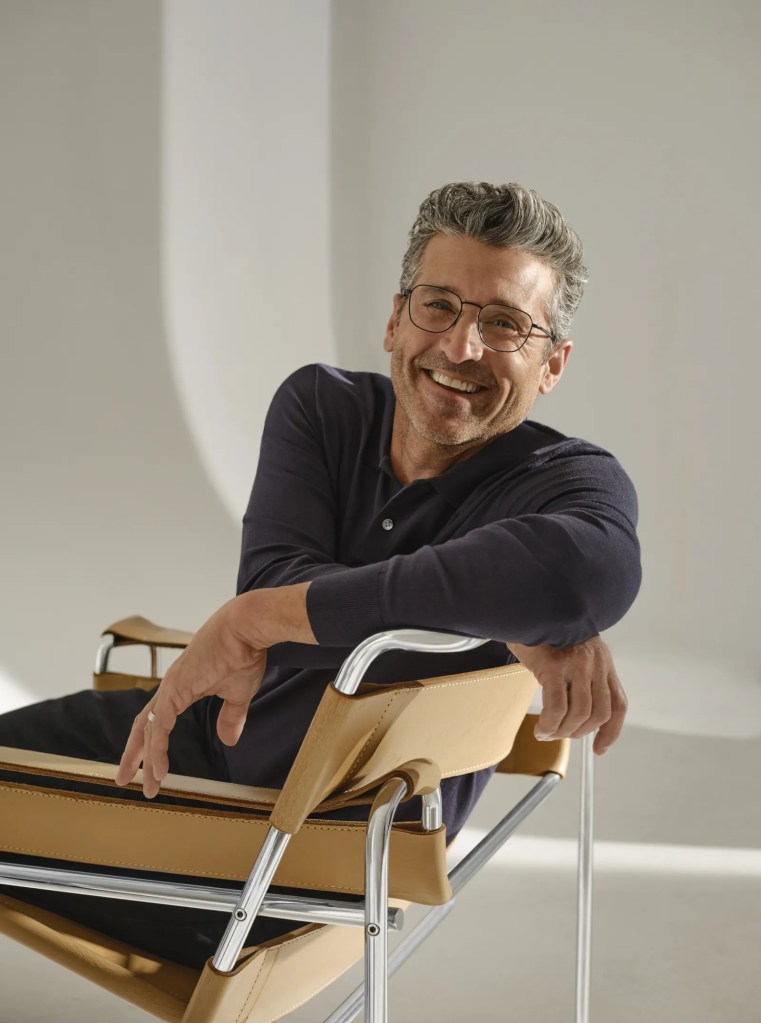
The interview came with two new photos from the photoshoot Patrick did for Porsche Design to promote the 2024 eyewear collection (find all the photos and videos here). Read the translation below.
Patrick Dempsey: “Where I’m probably happiest is when I’m racing. I find that acting is a painful, very challenging process. It’s not as easy as driving for me”
First of all, how does it feel to finally be able to do some interviews and talk about work after so many strikes and everything that has happened in Hollywood?
I was quite active during the strike. And the frustration now is that we are waiting for the materials and projects that we have been working on to arrive, now that the scriptwriters are finally carrying them out. So I have the impression that fewer things are happening now than in the months of the strike. Because we are waiting for the material and it is as if the machines are waking up slowly.
Let’s talk a little about Porsche Design. The brand is known for its design that is contemporary and timeless. How has your taste in design and fashion evolved over the years? Has it become more daring or perhaps more classic?
It would be fun if it were more daring… Actually, I think we have focused on the classic side, which is partly what Porsche Design is: you take a form that you understand and that you identify and you already know what that form is going to produce. And it’s fun to work in collaboration with them, as with the glasses I’m wearing now. First you work on the carbon fiber and titanium frame and then you play with the lenses. And all this arises from lightness, practicality and also style. That was one of the first things that were designed and the important thing is those changes in these iconic lenses. You know, part of that story is funny.
I have seen the images of the campaign and I have to say that at 58 years old you can still defend a look of a leather jacket and aviator glasses very well…
[laughs] Yes, but it requires much more work. I have to be very disciplined with my diet. And the key is in the exercise, you know? Because everything in life, if you don’t use it, you lose it, that’s true. I need to stay active. It’s good. And I have teenagers at home who inspire and motivate me to be able to keep up with their pace.
You became a kind of icon of male beauty at the beginning of the century, but the magazine People didn’t name you as the sexiest man in the world until last year. Two questions: Why have they taken so long? And what do you think makes you sexier and more attractive now than then?
I have no idea. I think you just get old well and stay in the spotlight. Maybe that’s it. But I think the thing has more of a path. I was also wondering: why have I been chosen? And I think it had a lot to do with the images that were broadcast from the Venice Film Festival [on the Ferrari red carpet], where I was seen with that classic masculine style and that classic line. And I think that people are simply rediscovering me in a different way. I don’t know. I’ve never fully understood it. As of today, I still don’t understand it. But I am certainly grateful for the focus that has been placed on me. Now, can I take advantage of that visibility in a positive way? That is the most important question.
Men usually buy their first Porsche when they reach their midlife crisis. You bought your first Porsche with your first salary, is it true?
Correct. I bought it when I had just turned 18. It was a 356 Cabriolet. I still have it. It’s in the garage. I bought it from a woman who was doing ADR [Additional Dialog Recording] for a movie that had not yet been released, entitled Top Gun. And the car that appeared in that movie, the Speedster, was a kit car [a replica], and the sound that was recorded was that of the car that I bought from the sound engineer, the woman who had it. So I’m the third owner of that car.
Where does your passion for cars come from?
Oh, since I was little, I’ve always loved cars since I was very young. My father was a great car enthusiast and owned a team. He ran in cars and had a team. And I started collecting cars at a very young age. Now my cars are much bigger and the boxes to store them are much bigger too.
And how did your relationship with Porsche begin on a professional level?
It started, I think, in 2013, when I ran with them in Le Mans. I competed in Le Mans three times with Porsche and then I ran in the WEC. I had been competing for several years and I finally considered that I had reached the level to join Porsche comfortably. And that was a great turning point for me, that Porsche recognized me as a driver and to be able to race with them. I learned a lot about engineering, teamwork, camaraderie and brotherhood, and then the legacy and pressure that that entails, you know, understand what pressure is and how to survive it, and prove your worth on the track. That was very exciting. My partnership with Porsche has profoundly changed my life.
I have to say that I was there in Le Mans the first year you ran with Porsche.
2013?
Yes, yes.
I remained in the contest. I finished, I think, tenth in my first race with Ferrari and then I was always fourth or close to the top five. I never crashed. And finally, as a driver, I finished on the podium in 2015.
I have to say that I have a lot of respect for what you did, because you were already a very respected person in your field, and I guess it has to be scary to get into something totally different to compete against people who have been training for that all their lives, right?
Yes, I was very lucky, first of all, to be able to fulfill the dream of going to Le Mans, not only once, but four times. That was extraordinary in itself. And then having the ability to survive mentally… The race is much more difficult mentally than physically, I think. Because there is so much pressure, so much attention on you… And then, in 2015, due to the LMP1 program, 919, and also the anniversary of that year [the 50 years of 911], there was a lot of pressure on us to perform. So having the mental strength to do that, learning to be strong mentally and then physically and then having the ability not to get into trouble and be constant as a driver… But I felt a lot of respect inside the paddock. I also had a lot of respect for them and for being part of the race, because I carry it in my heart. I love it. I absolutely love it. There is nothing that compares to that feeling.
I have to say that, a few years later, I interviewed Fernando Alonso and he remembered that in 2018 you approached him in the box and told him: “I just want to shake your hand and tell you that what you are doing for motorsport is wonderful.”
Oh, absolutely. I think Fernando is an incredible driver. He had a great season last year with Aston Martin, he has really regained his shape. And you know, he came here and did the Indianapolis 500. He is a real driver. I mean, the guy loves his sport with real passion and you see him competing in all these different disciplines… And someone with his visibility and his accessibility and kindness to fans… He has really elevated the sport. Certainly in America, he has done a lot, I think, for motorsport. And he has also won in Le Mans. The only thing he hasn’t done is win the Indy. I hope he tries again, although I think it’s too dangerous a race. But yes, he is one of the drivers that I admire and it certainly inspires me. He is also a good cyclist!
And from one to ten, how happy are you that Formula 1 is finally known in the United States and you can talk about Formula 1 with normal people?
It’s really fascinating. Drive to Survive has made people understand why it’s such an exciting sport. Before, people didn’t understand it, they only saw a car driving around. And I think that now you also have Daniel Ricciardo, who has been a wonderful ambassador for F1, because he is very nice. And Christian Horner and all the other drivers who are in Drive to Survive… You begin to see the humanity behind the sport, the challenges behind the sport, and the drama and the danger and emotion.
My only concern is that Formula 1 will expand too much here in America. I think it’s necessary to remove a race. I was very surprised and I was happy for the success and quality of the races in Las Vegas. For me, it’s a much better date than Miami. I think they should turn Miami into a night race. I think it would be much better, much cooler. And compete on some of those legendary tracks… If we could do something in Watkins Glen, a circuit that has a lot of history, or something like that, it would be really interesting. But it’s nice to see that the sport is working so well. And now it’s also affecting the cinema. You see that there are more movies about this.
This was not on the agenda for today, but there is probably no more important news in motorsport these days. What do you think of Hamilton’s change to Ferrari?
Yes, there is also talk of Christian Horner being asked to leave Red Bull… I don’t know if it’s true or not. But yes, I think it’s… It’s interesting that we just talked about everyone wanting to drive for Ferrari, you know? So yes, it’s good for sports. It’s probably good for him to break with everything and shake the team in Mercedes so that they are a little more hungry than they already are.
And then, you know, hopefully Ferrari could put things in order. They did a great job in Le Mans last year. They had an incredible team spirit. Before the race, I remember that… I always take a walk around the paddock to see what the energy is like in the pits. And they, without a doubt, had the best team spirit. They just knew they were going to do it right. You could see the team together. Compared to the other teams, it was a completely different feeling. So I’m looking forward to seeing what happens. Although I think this year will be a challenge for Hamilton to continue at Mercedes, you know? We will have to see if he receives the support of the team or if they will give it to Russell.
And the fact that it has been announced right now, the best promotion for a movie like Ferrari, don’t you think?
Yes… The truth is that it has made me very happy to be part of the movie and drive in it. And I love that period in the history of motorsport. Portago… I mean, you’re from Spain, so you know who he is and you understand the value of what he did for the sport, it was really special. I always loved this period and I wanted to make a movie from the 50s, and certainly about the Ferrari team. And then you had [Wolfgang] von Trips too, who we didn’t talk about in the movie, but who was an important character. He did the Mille Miglia and got on the podium, I think he won in his category with Porsche when he was very young. And his parents didn’t know that he had done the race. They found out when he came to dinner, because he was the last of that kind of aristocracy, just like Portago, right? That generation after World War II. And, unfortunately, we lost these two incredible men and drivers.
Now motorsport is highly professionalized, and the gentlemen drivers have practically disappeared. Have you ever felt like a gentleman driver or always like a professional driver?
Now even the gentlemen drivers are certainly at the level of Le Mans. And if you are in the WEC or in most series, the budgets are much bigger. So the risks are much greater. If you make a mistake, it is very expensive, not only physically, but also financially. So you have to take it very seriously and like a professional. I always felt like a professional driver. I wanted to be. I was living the dream that many people want to live. I went from watching races on the couch to taking classes at the Skip Barber driving school and then going up little by little for several years. I ran competitively for 15 years and it’s a great commitment. It’s a sacrifice.
When you enter the track, it doesn’t matter how famous you are, how rich you are or how handsome you are. The only thing that matters is the time, the stopwatch. Is this something that attracts you to motorsport?
Yes, it is undoubtedly camaraderie, teamwork and then emotional and physical challenge. Can you get a little further when braking? You know, you have so much data… You can see where the good drivers are and then the incredible drivers like Alonso. They simply have this gift. It is a gift from God. You know, you can work and work and improve. But then there’s that person who is just special. And they have that moment in which everything aligns, the mechanics, the chemistry of the team and their talent, and that’s when they begin to reach their highest level. And it’s fun when everything comes together and you feel like you’re transcending. There is nothing like it.
As I understand it, you stopped racing for your family…
Now I’m going back to it. You know, I think it had a lot to do with the preparation and the driving hours I did for Ferrari. And then last year with Porsche we went to the Panamericana Race and did several stages. That was a race that Piero Taruffi won too, so it was great to be able to do that. I am going to do more races in GT4, we are working to be able to do some races this year. So I’ll go back to it, just because I need it, I won’t be at the same level or in so many races, but I’m going to do it. My family tells me: “You need to do this for yourself. We can see the emotional and physical change when you are preparing for a race.”
So, now your family is encouraging you to do it…
Yes. I just got back with my son last week. I took him to a driving school for teenagers here in Carson, in a high-performance center. And it is a great program for young drivers, so that they understand how to control a car. And my daughter loves motorsports, so she likes to come to the track with me. They are at an age when they can come and enjoy the sport, they are safe off the track and they can participate and support the team.
You’ll probably tell me both, but which do you feel more like, actor or driver?
Where I’m probably happiest is driving. I find that acting is a painful, very challenging process. It’s not as easy as driving for me. It’s a different challenge. My challenge is to find things that hook me, that challenge me, and find characters that are different and surprising. And that’s hard to find. And you have to generate that. You have to create that and show people that you can do it, because somehow you get pigeonholed and you have to break out of that.
And is there anything in film, like directing or writing, that you would be excited to do in the future?
Yes, producing I think. I have done some things as a producer. We did Art of Racing in the Rain and the documentary about Hurley. And I have directed something for another brand that I will not mention here. So I’ve done that. And when you look at the great careers, the actors usually reach a point where acting is not enough, where they understand that they want more. So you have to start writing and developing your own material. And then, if you have the ability to lead, yes. I just haven’t found the project I would like to direct yet. There are a couple of things I’m working on that I haven’t done, but I think maybe that’s the next step.
In this movie, Ferrari, you can combine both passions. Did being a professional driver help you prepare for the role or maybe that passion can also sometimes work against you when it comes to telling the story?
I knew the story too well. So I could go to Michael [Mann] and say, “You know, Michael? You should consider doing this.” He told me: “Yes, but that’s not what I want to tell.” And you have to trust him. But I kept sharing my ideas and my understanding of the history of the sport. And I got the role for being a driver. We knew each other, we had met many years before at an event in Hollywood. It was a car event and he was following my career as a driver at that time.
I called him. I sent him an email. I told him: “I’ve heard that they’re finally going to make the movie, because you’ve been trying to make it for several years.” And he said, “Yes.” And I told her: “I would love to be part of it. Can I?” And he said, “Absolutely.” So we scheduled a conversation. I went to his office and asked him: “What can I do? I just want to be part of the movie in any way.” And he said: “Let me think about it.” And then he called me a week later and said: “Do you want to play Taruffi? You’re old enough already” [laughs]. Because Taruffi won the Mille Miglia at the age of 50 and that was his last race. I was already far beyond 50 when I got there.
And he told me: “I also want you to do all the driving.” And Robert Nagle, who is the stunt coordinator, called me and said: “Do you want to do all the driving yourself? Because we would love for you to do it. I need you to come a week earlier.” And there is a track near Milan where we did tests. It’s a test track that I think Audi runs. And I spent two weeks there just testing the cars. It was great. And then driving. I’ll tell you that I’ve never been more afraid in a car in my entire life than filming the movie, because the cars didn’t have a roll-over cage. They had a Caterham chassis, and then of course, they built the body on top, because they were replicas. So at least the chassis was modern. But we were going as fast as those cars could go. It was exciting.
Have you seen the documentary The Man and Le Mans, about the filming of Steve McQueen’s film Le Mans?
Yes, I’ve seen it.
And after watching it, weren’t you afraid to film this movie?
No. I mean, there were times when we were scared. There is a sequence when the Mille Miglia begins, at the start, at the beginning… It’s a night race and it’s raining. Because there was a real storm and the visibility was horrible. I mean, all of us drivers, when we came back, we looked at each other as if saying, oh, my God, this has been the most dangerous racing experience we have ever been through. And yet we kept filming. It was incredible. I think all those skills that I have developed on the track helped me stay calm and focused. The other actors wanted to do it too and they weren’t allowed, and I’m glad they didn’t. It was very dangerous, certainly. But it was authentic and it was fun.
It is known that Steve McQueen, during the filming of Le Mans, was obsessed with authenticity, and if they told him “we’re going to film you getting out of the car,” he said: “Okay, but in that case, let me go around the circuit a couple of times and then you make the shot.”
Exact.
Did you also have that level of perfectionism?
Well, Michael was very… You know, we took very long shots in which we were in the car for an extended period of time. So you did have that feeling, he wanted that authenticity. So he was pressuring you to get it. Because we were filming on a road, we didn’t have a track, so we couldn’t race. But we made long and extended sequences that were in a single shot with multiple cameras. So there was a sense of continuity and rhythm. You had to stay concentrated, because you entered an area with a lot of activity, with all the other actors and all the other drivers moving around. So you had to be really attentive. And if you made a mistake… We ran in a loop inside Modena, in the center of Modena, on cobblestones and with a camera in the car. So the balance of the car was constantly changing. It was dangerous and it was fun, it kept you under pressure. That’s why when you got out of the car or said your line, you felt the adrenaline and you had the right approach.
I’m sure the insurance company was delighted with all this that you’re telling me…
I’m still surprised that they agreed to insure us so we could do it. I couldn’t believe it. I really couldn’t.
Better for you. We previously talked about you racing at Le Mans for four years. When did your romantic story start with that career?
Oh, it started ten years before I went for the first time, when I started racing. It was always the goal to get to Le Mans, because as an amateur driver, that’s something you can really do. It’s a matter of finding the financing and enjoying a great experience. I had raced a lot in the United States. I had done Sebring, I had done Daytona, I had been on the podium in Daytona, VIR [Virginia International Raceway], Watkins Glen, all the major racetracks, and IMSA [International Motor Sports Association, a racing promoter in the United States] in multiple categories. So I was very prepared when I arrived in Le Mans for the first time in 2009. But that was always the goal.
Have you ever dreamed of becoming a 24 Hours icon, like Steve McQueen himself?
Oh, I don’t think that’s possible now. But Paul Newman raced there, and he wanted to top his performance. I wish I could have done it. Thinking about it, it would be incredible if we all got together and could do qualifying laps to see who is the fastest. I would love to know who it would be.
Newman was very good…
And so was McQueen. McQueen was on the podium in Sebring. I don’t know what his lap time was with [Peter] Revson. I think Revson was his co-driver. But he raced in his Porsche with a broken leg.
Finally, where do you feel the most adrenaline, on the set of a movie or on a track?
It’s interesting, because what you really have to do is control your adrenaline. You can’t allow it to dominate you. I think the same thing happens in front of the camera. Usually, in your first shot, those large shots or those big shots, you have adrenaline. You really have to control it. I think that’s the fun part, feeling all that emotion and being able to do your job and not letting it paralyze you. I think I have learned all those skills through racing, and that is why it is important for me to continue racing, it keeps me sharp, physically, emotionally and mentally ready for it. That way of being in the moment, of being present as an actor, is very important, and it is the same for a driver. And in everyday life, it is also important to have that awareness.
Source: https://www.revistagq.com/articulo/patrick-dempsey-entrevista-porsche-ferrari
Discover more from The Dempsey Hub
Subscribe to get the latest posts sent to your email.
 The Dempsey Hub