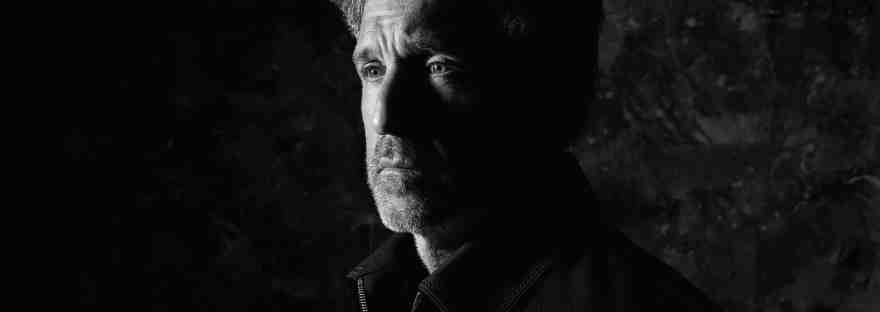
New interview and photoshoot.
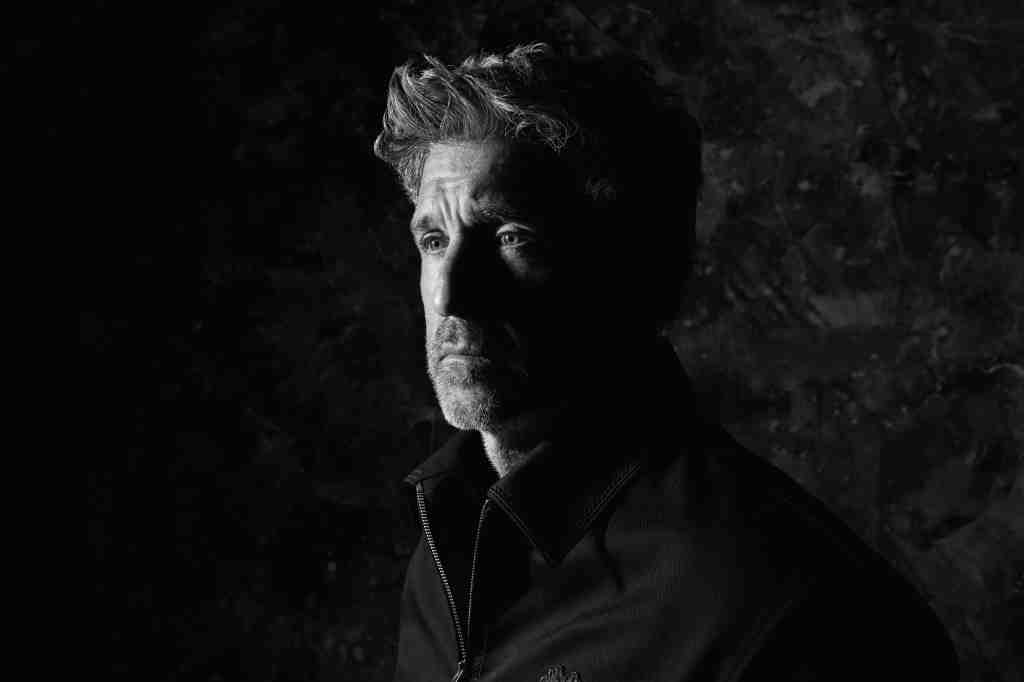
While he was in London, England earlier this year, Patrick Dempsey sat down for an interview with the magazine Hunger and posed for a photoshoot with Rankin who is also the creator of the magazine.
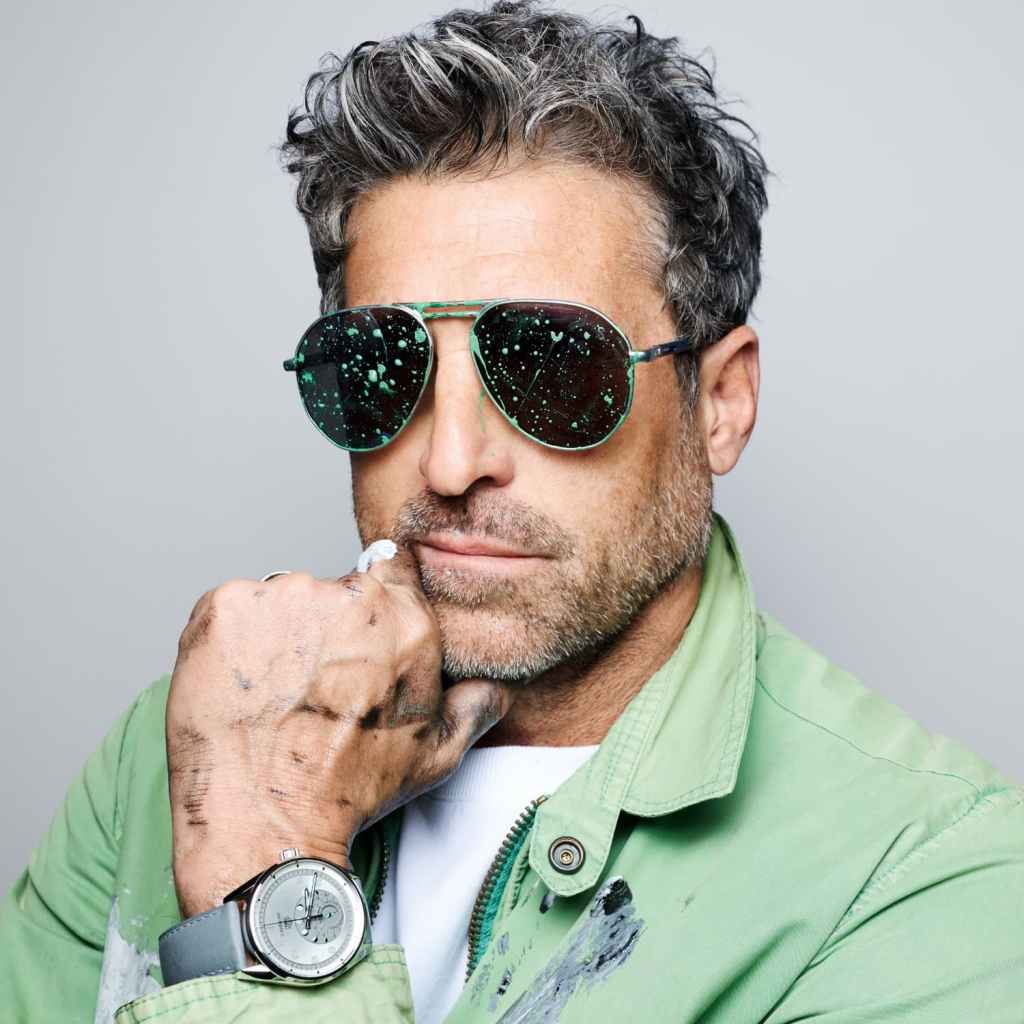
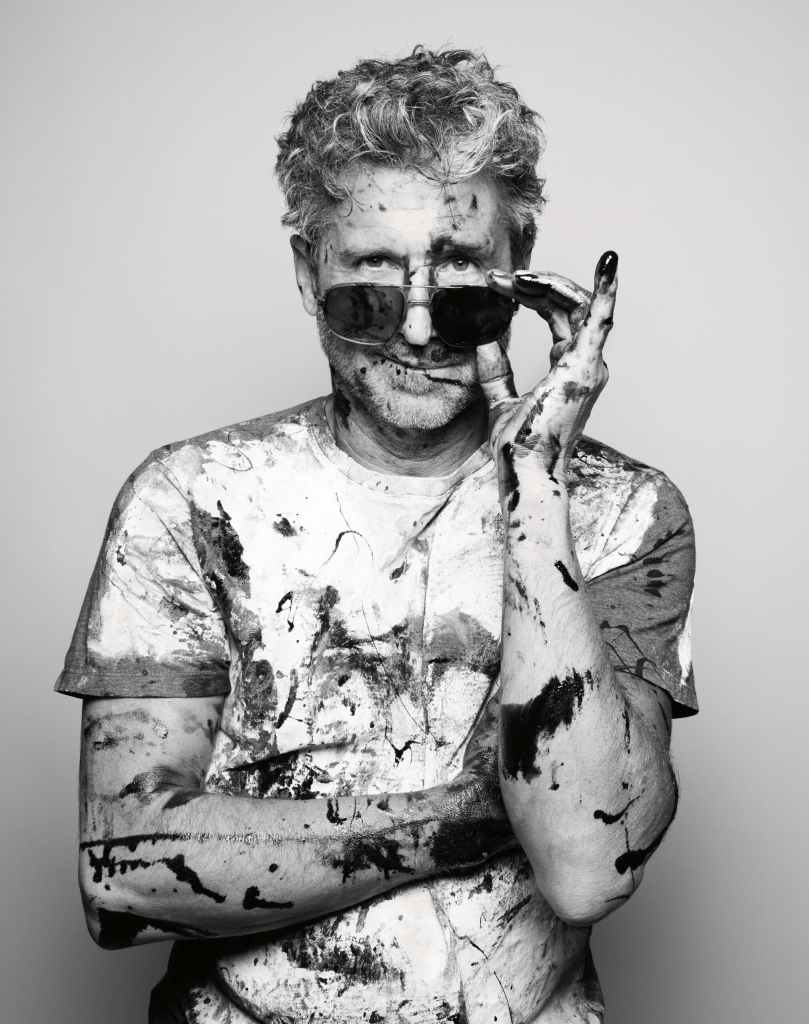
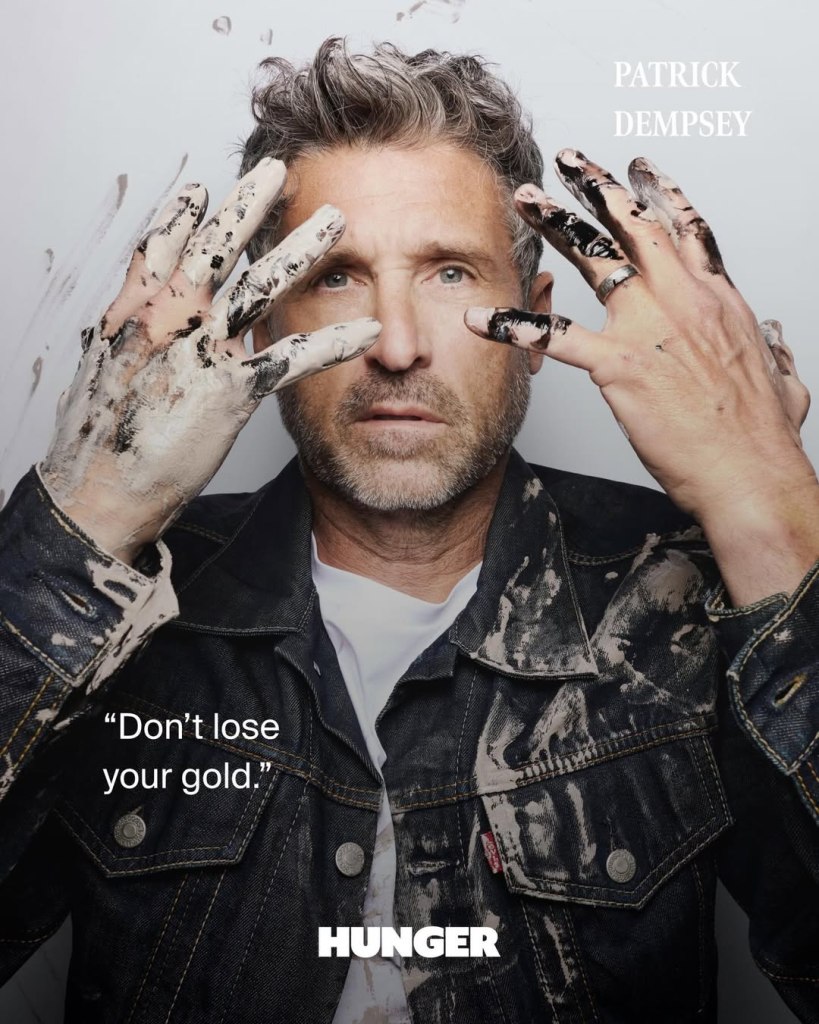
The photoshoot is quite the departure from what we are used to but it is a welcome change nonetheless. We get to see Patrick embrace his “wilder” side. All the photos are available in the gallery.
In the interview he discusses The Art Of Racing In The Rain, his relationship with TAG Heuer, racing, the Dempsey Center and overall offers a few words of wisdom. Read the full conversation below.
Rankin: I’m going to start off by saying, when you do these interviews, sometimes you have to ask stupid questions, so I’m sorry about that.
Patrick Dempsey: There are no stupid questions, right?
R: Good. Because I’m definitely about to ask some. I watched The Art of Racing in the Rain yesterday — which you produced — in preparation for this interview, and I bawled my eyes out.
PD: Clearly you have dogs.
R: I have got dogs. I’ve got four dogs. The dog thing hit me the strongest, but the line, ‘Keep your eyes on the destination, not the obstacles, and the car will go that way’, feels a bit like a manifesto for your life.
PD: It’s an interesting story. I started racing in mid-2000 and the book had just come out. I had the rights to the book for over 10 years and when we got a green light, they said I was too old to play the lead character. So I had to let it go and let my ego go. It was a real metaphor for sticking with it, opening up your heart and allowing the process to evolve.
R: Has anything else you’ve made given you that feeling?
PD: I think I’m too critical. It takes me years to be able to go back and be able to watch with any objectivity. When you do shows like Grey’s Anatomy, you reach so many people on such a profound level — either the love story they buy into, or it propels them into the medical profession. And then you have to let that go. You know the end result. I think as an artist, focus on the process, because the end result is out of your hands.
R: A lot of critics didn’t give a great review of The Art of Racing in the Rain.
PD: No, because it was too sappy, right? It was really surprising to me that you brought that movie up because that movie is a profound disappointment for me. It wasn’t meant to be. I got to do my racing film in a different way — I got to do the Michael Mann film [Ferrari (2023)] which was [set in] the era that I loved the most. I ended up doing what was right. Sometimes the most important thing to remember is, just because you want it, [it] doesn’t mean that’s the right thing for you.
R: Were there any failures that you’ve had that have kind of been great for you in a way?
PD: I think the failures are what drive you to improve. It’s different when you’re racing, but as an artist, the failures are when you really learn the most. I think the biggest challenge is creating the right culture where it’s safe to fail and the mistake is the gift.
R: Did you become a racing driver because you wanted the control that you didn’t have with acting?
PD: I never wanted to be an actor. I wanted to be Ingemar Stenmark. I wanted to be an Olympic ski racer. I remember watching Ingemar Stenmark in his dry-land training where he was riding the unicycle, and I was like, ‘Oh, I better buy a unicycle’. We didn’t have a lot of money so I ended up selling seeds door to door to make enough money to order this unicycle. And then I got the bug on performing and I became an actor. It wasn’t until my wife sent me this Skip Barber competition certificate and opened Pandora’s box [that] I got started racing. I never felt comfortable in front of the camera because it’s about words and I was diagnosed with dyslexia. And [racing] was really what saved me while I was doing [Grey’s Anatomy]. That was where I could find my masculinity and my strength. There’s this beautiful ballet when you’re racing that is silent yet really quite vocal. That’s where I feel the most alive.
R: Do you think that enhances the other parts of your life in terms of acting or producing?
PD: You have to have the right car — the right script – to be competitive. You have to have the right engineer, which is the right director. A lot of those things have really taught me how to put together the right team. It makes me work harder as an actor.
R: You’ve been a TAG Heuer ambassador for 12 years. What have been your favourite moments with the brand so far?
PD: I’ve had so many incredible experiences over the years, it’s hard to pick just one, but I think the most important one was having them as a sponsor making it possible for me to compete at Le Mans in 2014 and 2015. Representing them legitimately will always be an incredible achievement and a tremendous honour. Being on the podium, both as a driver and as a team owner was a great memory and an incredible experience.
R: As you mentioned, TAG Heuer is heavily aligned with racing. What do you think makes the brand fit the sport so well?
PD: I think TAG Heuer and motorsports are as authentic and true to the brand as Porsche is to motorsports, as well. It’s in their DNA. It’s their reason for being.
R: Beyond your own interest in racing, your hobbies include collecting watches. What is your favourite TAG Heuer watch in your collection and why?
PD: I don’t know if I have one favourite watch [but] I certainly love all of the vintage watches. Each of them I’ve collected are important moments in the history of the brand. A lot of what is coming out is inspired by the past — it’s a constant refinement. But the new Monaco Evergraph I enjoy very much. It’s lightweight, enjoyable to wear, extremely comfortable and the new movement is revolutionary.
R: What is it about TAG Heuer’s philosophy that you align with and that makes you want to continue representing them as a brand?
PD: The overall force and philosophy is about constant refinement — taking what you have and improving upon it without losing your identity. And I think, in many ways, this is what life is about. As human beings we need to constantly work on improving ourselves each day, designing a lifestyle that allows us to grow and evolve. There’s a great quote from Jack Heuer, ‘Time never stops, why should we?’ We should always be evolving and improving.
R: A lot of men from our generation were given a weird template of what success looks like. You’re almost opposite to this new generation and how they’re talking about their power. You’re more interested in life.
PD: Well, I’m just older so I’ve been through it. I’m not any different, I’m just on the other side. I wanted all that stuff. I wanted to be famous. I wanted the fancy race cars and the clothes, and still do. [But] when you get that, you realise that’s not going to make you happy. Although, there’s still shit I like to get, so I’m full of shit, as well.
R: You seem to have this very kind of North Star moral compass with the philanthropy you do at The Dempsey Center. Did that come from somewhere?
PD: My mother was diagnosed with ovarian cancer in the late ’90s and I felt really helpless. Grey’s Anatomy came along and then suddenly I became the archetype [of] this doctor and I had to live up to that. It forced me to work toward being a better person and use that platform to develop the centre. At the centre, we don’t treat the disease, we treat the person holistically, because once someone comes out of treatment they may be cured, but they’re not healed.
R: In Memory of a Killer , you play a hitman who relies on his mind but whose memory is failing. That’s quite complex.
PD: What I like about the opportunity to do Memory of a Killer, is I can allow myself to tap into the shadow side of my nature. [Carl] Jung talks about that. When I was in school, you had to be tough, because they would pick on you [when] you were learning-disabled. The systems that are educating people are not working because we do not all learn the same way. And that doesn’t necessarily make me cry, but it pisses me the fuck off. That drove me into performing — that rage.
R: Patrick, you seem like somebody who is always in control. But your shoot today has been out of control, and I’m wondering, which one is you?
PD: Well, I think you should always be on the verge of being out of control, but having the emotional discipline to stay right at the rev limiter without blowing the engine, if you will. The older I get, the better I get at being able to keep that anger, frustration, fear and vulnerability in control, so that when I have the freedom and the safety to release it, I can. Today, [people like] you set the culture and the environment and the support system to be free. And that’s why you see young artists, when they come in, they have their gold. [But then] I think you get to a point [again] where you say, ‘I don’t fucking care anymore, I’m just going to go for it because the time is running out’. Don’t lose your gold.
R: One last thing: going back to where it started, you made me cry. When was the last time you cried and why?
PD: I cry all the time.
R: Why?
PD: Things move me. I think the last time I was [in London], I posted about a guy [who] was polishing shoes. It’s such a lost art. It was the way he touched the shoes, it was the way he was communicating with the gentleman and the time that he took. It just made me think, ‘What a humble job. What a beautiful thing to do’. If you think of touching someone’s feet in Hinduism, what that means is profound. And that moved me profoundly. We all have to come together and protect each other.
Discover more from The Dempsey Hub
Subscribe to get the latest posts sent to your email.

